Moving Truck Loading Help: What You Need to Know Before Moving Day

Renting a moving truck is one of the most cost-effective ways to handle a local move on Long Island. But saving money on the truck does not automatically mean the hard part is done. Loading a moving truck efficiently, safely, and without damaging your furniture or injuring yourself is a genuine skill - one that professional movers develop through training and repetition. If you have already reserved your truck or portable storage container and simply need experienced hands to do the heavy lifting, you are not alone. Plenty of people in Nassau County, Suffolk County, Queens, Brooklyn, and Manhattan find themselves in exactly that position. This guide will walk you through everything you need to know about moving truck loading help: how to prepare before the crew arrives, how professionals actually load a truck, what to ask when you book labor-only help, and when it makes more sense to hand the entire move over to a full-service team.
How to Prepare Before Your Loading Crew Arrives
The single biggest factor in how smoothly a loading job goes is preparation. When a crew of professional movers arrives and finds a home where every box is packed, labeled, and stacked near the door, the job moves quickly and efficiently. When they arrive to find half-packed rooms and furniture that has not been disassembled, the process slows considerably. If you are paying for hourly labor help, every minute counts - so getting your home ready in advance is genuinely worth the effort.
Start by finishing all of your packing well before moving day. Every box should be sealed, taped, and clearly labeled with both its contents and its destination room. Labels like "Kitchen - fragile" or "Master Bedroom - books" allow the crew to load items in a logical order and make unpacking far easier on the other end. Use uniform box sizes wherever possible, because oddly shaped or mismatched boxes are harder to stack and waste vertical space in a truck. Fill boxes completely so they do not collapse under weight, and use packing paper, bubble wrap, or clothing to pad empty space inside each box.
Next, take care of your furniture before the crew arrives. Disassemble bed frames, remove table legs, and take apart any flat-pack furniture that breaks down easily. Wrap glass tabletops, mirrors, and artwork in moving blankets or bubble wrap and secure the wrapping with tape. If you have a sofa with removable cushions or legs, take those off. The less assembly work the crew has to do on the spot, the more time they can spend on the actual loading. That said, if furniture disassembly feels overwhelming, it is worth noting that full-service movers like Zippboxx offer furniture disassembly and reassembly as part of their service options, which can save you significant stress.
Clear a path from every room to the front door. Move rugs out of the way, open all doors fully, and remove any obstacles in hallways or on staircases. If you live in an apartment building, reserve the freight elevator and find out whether the building requires a Certificate of Insurance from the moving company before they can operate in the building. Many New York City and Long Island co-ops and rental buildings have this requirement, so it is worth confirming early. Zippboxx provides Certificates of Insurance for buildings when needed, which is a detail worth asking any labor-only crew about before you book.
Finally, deal with parking before the day arrives. A moving truck needs a clear, close parking spot to load efficiently. If you live on a busy street or in a neighborhood where parking is competitive, contact your local municipality about temporary parking permits or no-parking signs. The closer the truck can park to your front door, the fewer steps the crew takes on every trip, and the faster the job gets done.
How Professional Movers Actually Load a Truck
Loading a moving truck is not simply a matter of putting things inside until it is full. Professional movers follow a deliberate system that maximizes space, protects your belongings, and keeps the truck balanced during transit. Understanding this system helps you appreciate why experienced help is worth having - and helps you communicate clearly with any crew you hire.
The process begins at the back wall of the truck. The heaviest, sturdiest items go in first and against the cab wall. Large appliances, heavy dressers, and bookshelves are loaded upright and pushed flush against the front of the cargo area. This placement keeps the center of gravity low and forward, which improves the truck's handling on the road. Sofas are often loaded on their end to maximize vertical space, with their backs against the wall.
Once the heaviest pieces are in place, medium-weight items like mattresses, box springs, and mid-size furniture fill in around them. Mattresses are typically stood upright along the sides of the truck to act as padding and to free up floor space for boxes. Box springs follow the same approach. Dining chairs can be stacked seat-to-seat to minimize the footprint they take up.
Boxes come in last and are stacked in columns, heaviest boxes on the bottom and lighter, more fragile boxes on top. Books and kitchen items go at the bottom. Lamps, artwork, and anything marked fragile rides near the top or gets wedged between soft items for cushioning. The goal is to create a solid, stable wall of boxes that does not shift during transit. Professional loaders use moving blankets to pad the gaps between furniture pieces and prevent scratching, and they use load bars or straps to secure everything so nothing slides when the truck brakes or turns.
Weight distribution matters across the width of the truck as well as front to back. An unevenly loaded truck - heavy on one side - handles poorly and puts stress on the vehicle. Experienced movers think about this constantly, alternating heavier items from side to side as they build each row. It is a skill that takes practice to develop, and it is one of the clearest reasons why hiring trained labor for truck loading is worth the investment even if you are handling everything else yourself.
- Heavy furniture and appliances load first against the cab wall
- Mattresses and large flat items line the walls of the truck as padding
- Boxes stack heaviest-on-bottom in tight columns to prevent shifting
- Moving blankets pad gaps between furniture to prevent scratching
- Load straps or bars secure the load for safe transit
- Weight is distributed evenly side to side and front to back
- Fragile items ride near the top of box stacks or are cushioned between soft goods
What to Ask When Booking Moving Truck Loading Help
Not all labor-only or hourly moving help is the same. Before you commit to a crew, asking the right questions protects you from surprises on moving day. Here is a practical checklist of what to cover when you call to book.
First, confirm that the crew is licensed and insured. This is non-negotiable. An unlicensed crew working in your home creates liability for you if someone is injured or if your property is damaged. Any reputable moving company offering hourly help should be able to confirm their insurance coverage without hesitation. Zippboxx, for example, is a licensed and insured operation - which is a baseline standard you should require from any crew you hire.
Ask specifically what is included in the hourly rate. Some crews charge for travel time, supplies, or equipment separately. Others include moving blankets, dollies, and hand trucks as part of the service. Getting clarity on this upfront prevents disputes later. Ask whether the rate covers two movers or three, and whether you can add more crew members if the job is larger than expected.
Find out about minimum hour requirements. Many moving labor companies require a minimum booking of two or three hours, even for small jobs. If your move is genuinely small - a studio apartment or just a few large pieces of furniture - ask whether the company offers options for smaller moves. Zippboxx offers small move services as part of its range of moving options, which can be a better fit than a standard hourly arrangement for very compact relocations.
Ask about cancellation and rescheduling policies. Life changes, and sometimes a move gets pushed back. Understanding the company's policy before you book saves you from unexpected fees if your timeline shifts. Also ask how they handle delays - if the truck rental runs late or you need more time to finish packing, how does the crew respond?
If your building requires a Certificate of Insurance, confirm that the company can provide one before the job starts. As mentioned earlier, many New York apartment buildings and co-ops require this document, and finding out on moving day that the crew cannot provide it means your move cannot proceed.
- Confirm the crew is licensed and insured before booking
- Clarify exactly what is included in the hourly rate
- Ask how many movers are included and whether you can add more
- Ask about minimum hour requirements
- Understand the cancellation and rescheduling policy
- Confirm whether the company can provide a Certificate of Insurance if your building requires one
- Ask how the crew handles unexpected delays or changes on move day
When a Full-Service Move Makes More Sense Than Labor-Only Help
Hiring labor to load your rental truck makes a lot of sense in certain situations. If you are comfortable managing the truck rental, you have already packed everything, and you simply want experienced hands for the physical lifting and loading, hourly help is a smart, practical choice. But there are situations where trying to coordinate a DIY move with add-on labor actually creates more complexity and cost than simply booking a full-service move from the start.
If you have a large home with significant furniture, specialty items like antiques, fine china, pianos, or glassware, or items that need careful wrapping and handling, the piecemeal approach can backfire. Professional full-service movers handle specialty items with specific techniques and equipment. Zippboxx offers specialty handling for antiques, pianos, fine china, and glassware as part of its full-service moving options - something that goes well beyond what a standard labor-only booking typically covers.
Long-distance and out-of-state moves are another situation where full-service is usually the smarter call. Coordinating a rental truck across state lines involves additional logistics, insurance questions, and the challenge of unloading at the destination without a second crew already lined up. A full-service move handles origin and destination as one seamless job.
If you are also dealing with a storage component - needing to put some items into storage while the rest goes to your new address - full-service simplifies that considerably. Zippboxx offers full-service, on-demand storage with door-to-door pickup and delivery from its climate-controlled facility in Medford, NY. Items are picked up, stored securely in a monitored climate-controlled facility, and delivered back when you are ready. That kind of end-to-end coordination is difficult to replicate when you are juggling a rental truck, a separate storage facility, and a labor-only crew.
Pricing transparency is another reason to consider full-service. One of the clearest differentiators Zippboxx offers is a guaranteed, all-inclusive flat fee that is locked in before move day. The price does not change if the move takes longer than expected. For anyone who has rented a truck and hired hourly help, only to watch the costs add up as delays pile up, the certainty of a flat-rate quote is genuinely valuable. There are no hidden fees and no surprises at the end of the job - just a clear price agreed on before anything moves.
Office and commercial moves are also situations where full-service is typically the better fit. The logistics of moving a business - coordinating around office hours, handling sensitive equipment, and minimizing downtime - benefit from a professional team managing the entire process. Zippboxx offers office and commercial moving services for businesses across Long Island and the surrounding areas.
The bottom line is that labor-only truck loading help is a genuinely useful service for the right situation. But if your move involves complexity, specialty items, long distances, storage needs, or simply the desire to have one company handle everything seamlessly, it is worth getting a free quote for full-service moving before you commit to the DIY route. You may find that the difference in cost is smaller than you expected, and the difference in experience is substantial.
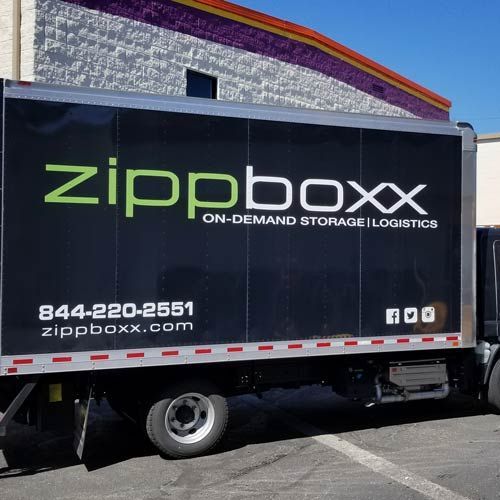
Whether you need a crew to load your rental truck efficiently on moving day or you want a full-service team to handle every step from packing to delivery, Zippboxx is ready to help. As a family-owned and operated moving, storage, and logistics company based on Long Island - with offices in Bohemia, Hauppauge, and a climate-controlled storage facility in Medford - Zippboxx serves Nassau County, Suffolk County, Queens, Brooklyn, Manhattan, and beyond. The team is licensed, insured, and trained, and every job comes with the kind of transparent, no-hidden-fees approach that makes planning a move far less stressful. To find out what your move will cost with no guesswork involved, call (631) 677-1251 or visit the Zippboxx website to request a free quote today.
SHARE THIS POST:
Get a Free Quote From Zippboxx
On-Demand Storage Experts
Zippboxx is much more than a team of people who love to keep you moving. We’re deeply invested in our people and our community.
Leave A Comment
Contact Zippboxx for a Free Quote
Blog - Website Form
Recent Posts


Services We Offer