How Do Moving Companies Handle Tight Staircases

Moving day is already one of the most stressful experiences a household can go through, and nothing amplifies that stress quite like the moment a team of movers arrives at your building and discovers a narrow, winding staircase standing between your furniture and your new home. Tight staircases are one of the most common logistical challenges in the moving industry, and they require a combination of proper planning, specialized equipment, physical skill, and creative problem-solving to navigate safely. Whether you live in a historic brownstone, a walk-up apartment in a densely packed city, or a multi-story home with steep interior stairs, understanding how professional movers handle these situations can help you feel far more confident on moving day.
The truth is that experienced moving crews encounter tight staircases on a regular basis. It is not the anomaly that many homeowners assume it to be. Urban apartments especially are notorious for narrow hallways, sharp landings, and low ceilings that make maneuvering bulky furniture feel nearly impossible. But professional movers have developed techniques and protocols specifically designed for these environments, and a well-trained team will approach your staircase challenge with calm efficiency rather than panic. Knowing what those techniques look like from the inside gives you a window into the level of expertise that separates a skilled moving company from an untested one.
The Pre-Move Assessment and Why It Matters
Before a single box is lifted, professional moving companies prioritize a thorough assessment of the staircase situation. This typically begins during the quoting or booking process, where movers ask detailed questions about your building layout. How wide are the staircase corridors? Are there switchback landings? How many flights are involved? Is there a railing on one or both sides? Are there any turns at the top or bottom of the stairs that might create a bottleneck?
In many cases, a reputable moving company will conduct an in-person or virtual walkthrough before moving day to document these details. This assessment is not just about curiosity — it directly shapes how the crew prepares, how many movers are assigned to the job, what equipment gets loaded onto the truck, and how long the move is estimated to take. When you skip this step or work with a company that skips it for you, you dramatically increase the risk of damage to your belongings, injury to workers, and unexpected costs on moving day.
Professional movers will also look at doorways at the top and bottom of the staircase, because the transition from staircase to room is often where the tightest constraints occur. A couch that technically fits through a stairwell might still get stuck at the landing if there is a 90-degree turn into a narrow hallway immediately above. These details matter enormously in the planning phase.
Strategic Disassembly of Large Furniture
One of the most effective tools in a mover's arsenal when dealing with tight staircases is disassembly. Large furniture items that seem impossible to carry up or down a narrow stairwell often become entirely manageable once broken into smaller components. Bed frames, sectional sofas, bookshelves, dining tables, and modular storage units are all common candidates for disassembly before a move.
Professional movers carry a range of tools specifically for this purpose, including Allen wrenches, screwdrivers, rubber mallets, and moving straps. A sofa with removable legs suddenly gains a few extra inches of clearance. A bed frame that would require three people to maneuver in one piece becomes a series of flat panels that a single mover can carry upright. Disassembly is not a last resort — for experienced crews, it is often the first plan of action when a large item needs to travel through a challenging space.
After delivery, the crew reassembles the furniture inside the destination room, ensuring nothing is left in pieces. The time invested in disassembly and reassembly almost always saves time overall when compared to struggling to force large items through spaces that simply are not designed for them.
Specialized Equipment for Staircase Navigation
Beyond disassembly, professional movers rely on a specific set of equipment designed to make staircase moves safer and more efficient. Understanding what this equipment does helps you recognize whether a moving company is truly prepared for your situation.
- Furniture dollies and stair-climbing dollies: Standard dollies help movers transport heavy items on flat ground, but stair-climbing dollies feature a tri-star wheel configuration that allows the device to roll up and down steps with significantly less effort and greater control.
- Moving straps and forearm forklifts: These harness-style straps distribute the weight of heavy furniture across the body rather than concentrating it in the hands and lower back. They allow two movers to carry items up stairs with far better balance and visibility.
- Furniture sliders and floor protection: Even on stairs, movers use padding and sliders to protect both the item being moved and the staircase surface itself, especially important in apartments where floor damage may result in charges from landlords.
- Moving blankets and corner guards: Tight staircases mean tight tolerances, and a single wrong angle can scratch a wall or ding the corner of a wooden dresser. Moving blankets wrap furniture to protect it from contact with walls and banisters, while corner guards are applied to walls to absorb impact.
- Rope and pulley systems: For extremely difficult situations where furniture simply cannot be safely carried up a staircase, some professional movers have the capability to hoist items through windows using a rope and pulley system. While this is not an everyday solution, it is a legitimate option that trained crews use for pianos, large sectionals, and oversized appliances.
How Crews Coordinate Movement on Staircases
Staircase moves are not just a physical challenge — they are a communication and coordination challenge. A team carrying a heavy dresser up four flights of stairs needs to move as a single unit, with the person at the bottom navigating blind while the person at the top guides direction and warns of obstacles. This requires a vocabulary of commands that experienced crews develop through repetition, and it requires a level of trust between team members that only comes from working together regularly.
Professional moving companies typically assign roles during staircase moves. One mover leads and faces upward, providing visual guidance and direction. Another mover follows, handling the weight of the lower end and following verbal cues. A third crew member, when available, may spot from the landing or clear the path of any obstacles. This choreography is especially important when navigating switchback staircases, where the team must pause at a landing and reposition the item before continuing upward.
Experienced movers also know how to angle furniture correctly for each type of staircase. The vertical tilt method, for example, involves standing a large sofa on its end to reduce its effective width, allowing it to clear a narrow corridor that it could never fit through horizontally. This technique requires spatial reasoning and an understanding of the item's dimensions relative to the space.
What Happens When an Item Simply Cannot Fit
Occasionally, despite every technique and tool at a crew's disposal, an item truly cannot be moved through a tight staircase safely. This is a rare outcome when you work with an experienced team, but it does happen. In these situations, professional movers will have an honest conversation with you about your options before forcing the move and risking damage.
Your options in these scenarios might include storing the item temporarily, selling it and purchasing a replacement that fits the new space, or arranging for a crane or hoist service to bring the item through a window. In apartment buildings, window delivery is sometimes the only viable path for large sectional sofas or grand pianos, and many moving companies either offer this service or can coordinate with a specialty provider to make it happen.
The key takeaway is that a trustworthy moving company will tell you about this challenge before it happens, not after your furniture is stuck in a stairwell. This is yet another reason why the pre-move walkthrough and honest communication are so valuable.
Protecting Your Staircase and Building During the Move
In apartments and multi-family buildings, protecting the staircase itself is just as important as protecting your furniture. Many buildings require movers to reserve elevators, obtain certificates of insurance, and take specific precautions to avoid damage to common areas. Tight staircases in older buildings often feature original hardwood treads, decorative banisters, or vintage tile work that is expensive to repair and irreplaceable in character.
Professional movers address this by laying down protective runners on stair treads, padding banisters with moving blankets, and applying corner guards to drywall throughout the path of travel. These steps protect you from liability claims and ensure your building management remains cooperative throughout the process. If a moving crew shows up without any of this protective equipment, it is a significant red flag about their level of professionalism.
Choosing the Right Moving Company for Staircase-Heavy Moves
Not all moving companies are equally equipped or experienced when it comes to tight staircases. When you are researching movers, there are specific questions worth asking before you commit to a booking:
- Do you conduct pre-move walkthroughs or assessments for challenging layouts?
- What staircase-specific equipment do you carry on your trucks?
- How do you handle furniture that needs to be disassembled and reassembled?
- Are your movers trained and experienced in apartment and walk-up buildings?
- Do you carry liability insurance that covers damage to the building's common areas?
- Do you offer window hoist or crane services for items that cannot fit through stairwells?
A moving company that answers these questions confidently and thoroughly is one that has clearly dealt with staircase challenges before. Vague or dismissive answers should give you pause, especially if your building has a particularly difficult layout.
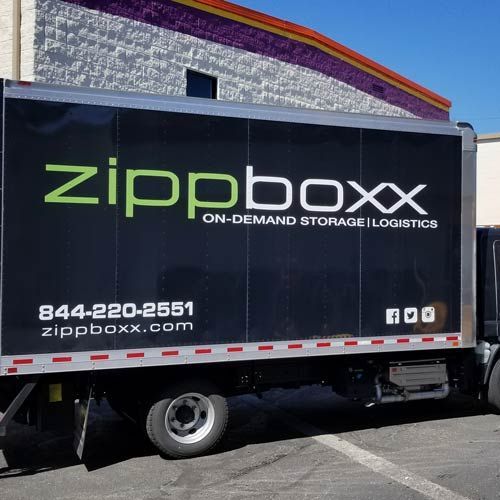
If you are planning a move that involves apartment staircases, walk-up buildings, or any space with tricky access, working with a team that specializes in exactly these situations is essential. Zippboxx offers professional apartment moving services with the experience, equipment, and trained crews to handle tight staircases and challenging building layouts with care and efficiency. Rather than hoping your movers figure it out on the day, you can move forward with confidence knowing the team arriving at your door has seen it all before.
Preparing Your Home Before the Movers Arrive
Even with the most skilled crew in the world, there are things you can do as the homeowner or renter to make staircase moves go more smoothly. Preparation on your end reduces the risk of delays, damage, and unexpected complications.
- Clear the staircase completely before movers arrive. Remove shoes, boxes, plants, or any decorative items from the path of travel.
- Inform your building manager in advance so that stairwells can be cleared of other residents' belongings on moving day.
- Measure your furniture and your staircase dimensions ahead of time and share those measurements with your movers during the assessment phase.
- Remove doors from hinges if they are creating unnecessary bottlenecks at the top or bottom of the stairs — this small step can add several inches of clearance.
- Be honest with your movers about every piece of furniture that will need to travel through the stairwell, so they can plan the sequence of moves accordingly.
Summer is peak moving season, which means staircase moves happen at an even higher frequency during these months. Crews are busier, days are longer, and the heat adds an additional physical challenge for workers carrying heavy furniture up multiple flights. The best thing you can do is make their job easier through preparation, communication, and by choosing a company that has the right tools and training for the environment they are working in.
Tight staircases do not have to be the nightmare scenario that keeps you up the night before your move. With the right professional team, a thorough pre-move assessment, the appropriate equipment, and smart preparation on your part, even the most challenging staircase can be navigated safely and efficiently. The key is choosing movers who treat these situations not as obstacles but as standard parts of the job — because for the best in the business, that is exactly what they are. When you are ready to schedule your move, make sure the company you trust has the expertise to handle every inch of your building, from the front door all the way to your new front door.
SHARE THIS POST:
Get a Free Quote From Zippboxx
On-Demand Storage Experts
Zippboxx is much more than a team of people who love to keep you moving. We’re deeply invested in our people and our community.
Leave A Comment
Contact Zippboxx for a Free Quote
Blog - Website Form
Recent Posts


Services We Offer